


Managing chronic pain with opioids is a complex area of healthcare that requires careful consideration of treatment effectiveness, potential side effects, and long-term safety. Opioids are prescription medicines that act on the nervous system to reduce the perception of pain. They have an established role in treating certain types of acute pain, cancer-related pain, and pain associated with palliative and end-of-life care. However, their role in chronic non-cancer pain is more limited.
People living with persistent pain may explore opioid treatment when other approaches have not provided adequate relief. However, long-term opioid therapy can involve significant risks, including tolerance, physical dependence, opioid use disorder, and respiratory depression.
Understanding how opioids are used in pain management, what clinical guidelines recommend, and which alternatives may be available can help patients make informed decisions with their healthcare professionals.
This guide examines the role of opioids in chronic pain management, including treatment considerations, potential benefits, risks, monitoring, and non-opioid alternatives.
Medical disclaimer: This article is intended for educational purposes only. It does not replace professional medical advice, diagnosis, or treatment. Prescription opioids should only be used under the supervision of an appropriately qualified healthcare professional.
Table of Contents


What Are Opioids?
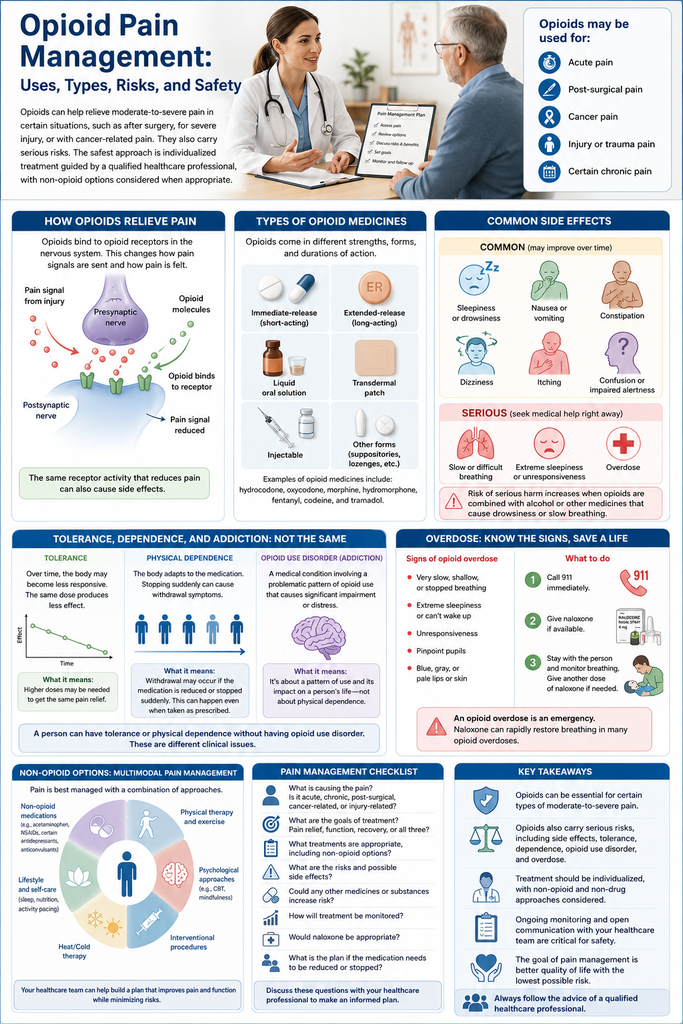
Opioids are a class of medications that act on specific receptors in the brain, spinal cord, and other parts of the nervous system to reduce pain perception.
They may be prescribed for certain acute pain conditions, cancer-related pain, and other circumstances where a healthcare professional determines that opioid treatment is appropriate.
Common prescription opioids include:
- Oxycodone.
- Morphine.
- Codeine.
- Hydromorphone.
- Fentanyl.
- Tramadol.
- Buprenorphine.
These medications differ in their pharmacological properties, formulations, clinical uses, and safety considerations.
Some opioids are available in immediate-release formulations, while others have extended-release or modified-release preparations. Their use depends on the medication, approved indications, and individual clinical circumstances.
How Do Opioids Work?
Opioids interact with opioid receptors, particularly mu-opioid receptors, which are involved in the body’s pain-processing pathways.
Their effects can include:
- Reducing the transmission of pain signals.
- Changing how the brain interprets pain.
- Reducing the emotional response associated with pain.
- Producing sedation.
- Slowing gastrointestinal activity.
- Suppressing breathing at higher or harmful levels of exposure.
Although opioids can reduce pain, they do not necessarily resolve the underlying medical condition responsible for persistent symptoms.
For example, someone experiencing chronic back pain may experience changes in pain perception without eliminating the underlying spinal or musculoskeletal problem.
What Is Chronic Pain?
Chronic pain generally refers to pain that persists or recurs for more than three months.
It can develop following an injury, surgery, illness, or an underlying medical condition. In some cases, changes in the nervous system can contribute to persistent pain even after the original injury has healed.
Chronic pain can affect multiple aspects of daily life, including:
- Physical mobility.
- Sleep quality.
- Work and productivity.
- Mental and emotional well-being.
- Social activities.
- Independence and everyday functioning.
Common chronic pain conditions include:
| Condition | Description |
|---|---|
| Chronic back pain | Persistent pain affecting the lower, middle, or upper back |
| Osteoarthritis | Joint pain associated with degenerative changes |
| Neuropathic pain | Pain resulting from nerve damage or dysfunction |
| Fibromyalgia | A chronic condition involving widespread pain and other symptoms |
| Chronic abdominal pain | Persistent abdominal discomfort associated with various medical conditions |
| Cancer-related pain | Pain associated with cancer or its treatment |
| Post-surgical pain | Persistent pain following a surgical procedure |
Different conditions require different treatment approaches. Opioids are not equally effective or appropriate for every type of chronic pain.
Are Opioids Recommended for Chronic Pain?
Opioids have an established role in certain pain-management settings, but they are not generally recommended as routine long-term treatment for chronic non-cancer pain.
Clinical recommendations emphasize identifying the underlying cause of pain and considering non-opioid medications and non-pharmacological treatments before opioid therapy.
In selected exceptional circumstances, a healthcare professional may consider an opioid as part of an individualized treatment plan.
The decision should consider:
- The underlying diagnosis.
- Pain severity and duration.
- Previous treatment outcomes.
- Effects on physical functioning.
- Existing medical conditions.
- Potential medication interactions.
- Risk factors for opioid-related harm.
- Available alternatives.
- The patient’s preferences and treatment goals.
Opioid Treatment for Chronic Non-Cancer Pain
Chronic non-cancer pain refers to persistent pain that is not directly associated with cancer.
Examples include chronic back pain, osteoarthritis, neuropathic pain, and certain musculoskeletal conditions.
The evidence supporting long-term opioid therapy for these conditions is limited.
Short-term studies have demonstrated modest average improvements in pain and function for some patients. However, evidence of sustained benefits over a year or longer is insufficient, while serious risks can increase with continued exposure.
For this reason, long-term opioid treatment requires particular caution and should not be viewed as a default solution for persistent pain.
Opioids for Cancer-Related Pain
Cancer-related pain is a different clinical situation.
Opioids can have an important role in managing moderate to severe cancer-related pain, depending on the patient’s diagnosis, treatment stage, symptoms, and clinical needs.
The treatment approach may differ from that used for chronic non-cancer pain.
Similarly, palliative care and end-of-life pain management require individualized considerations focused on comfort, symptom relief, and quality of life.
Potential Benefits of Opioids in Pain Management
When appropriately prescribed, opioids may provide meaningful pain relief in selected clinical situations.
Potential benefits include:
1. Reduction in Pain Intensity
Opioids can reduce pain perception by acting on receptors involved in the nervous system’s processing of pain.
This effect can be clinically important in certain acute pain, cancer pain, and palliative care situations.
2. Support for Severe Pain Conditions
For some patients experiencing severe pain, opioids may form part of a broader pain-management approach when other treatments are inadequate or unsuitable.
3. Improved Comfort in Selected Patients
Effective pain control may improve comfort and participation in everyday activities, particularly when pain is otherwise difficult to manage.
However, improvements should be evaluated individually rather than assumed.
4. Role in Multimodal Pain Management
Opioids may sometimes be included alongside other treatments, such as rehabilitation, psychological support, and condition-specific medication.
The objective is to manage pain through a comprehensive approach rather than relying exclusively on opioid medication.
Risks of Managing Chronic Pain With Opioids
Although opioids can reduce pain, they also have important safety risks.
Some risks may occur after short-term exposure, while others become more concerning with prolonged use.
Common Side Effects
Common opioid-related side effects include:
- Constipation.
- Nausea.
- Vomiting.
- Drowsiness.
- Dizziness.
- Itching.
- Dry mouth.
- Sweating.
The severity of these effects varies between individuals and medications.
Serious Opioid-Related Risks
Respiratory depression
Opioids can suppress the respiratory system, resulting in dangerously slow or shallow breathing. Severe respiratory depression can cause unconsciousness, brain injury, or death.
Tolerance
Repeated exposure can cause the body to become less responsive to an opioid’s effects. This is known as tolerance.
Tolerance can complicate treatment and does not mean that increasing medication is necessarily safe or appropriate.
Physical dependence
Physical dependence develops when the body adapts to repeated medication exposure. Withdrawal symptoms may occur if treatment is suddenly stopped or substantially reduced.
Opioid use disorder
Opioid use disorder involves a problematic pattern of opioid use associated with impaired control, harmful consequences, or continued use despite significant problems.
Physical dependence alone does not establish opioid use disorder.
Overdose
An opioid overdose can result in severe sedation, unconsciousness, and life-threatening respiratory depression.
The risk can increase when opioids are taken in excessive amounts or combined with other substances that suppress the central nervous system.
Understanding Tolerance, Dependence, and Addiction
These terms are often used interchangeably, but they describe different medical concepts.
| Term | Meaning |
|---|---|
| Tolerance | Reduced response to a medication following repeated exposure |
| Physical dependence | Physiological adaptation that can produce withdrawal symptoms when medication is reduced or stopped |
| Opioid use disorder | A medical condition involving problematic opioid use and impaired control |
| Withdrawal | Physical and psychological symptoms that may occur following reduction or discontinuation after dependence develops |
Understanding these differences is important because patients receiving prescribed opioid treatment may develop physical dependence without having opioid use disorder.
Concerns about dependence or problematic medication use should be discussed with a healthcare professional without fear of judgment.
How Healthcare Professionals Assess Opioid Treatment
Before considering opioid therapy, healthcare professionals should evaluate the patient’s overall health and the characteristics of the pain condition.
This process may involve a comprehensive assessment of physical, psychological, and social factors.
1. Identifying the Cause of Pain
The first step is determining what may be causing the persistent pain.
Assessment may include:
- Medical history.
- Physical examination.
- Review of previous injuries and illnesses.
- Relevant diagnostic investigations.
- Assessment of neurological symptoms.
- Evaluation of functional limitations.
Identifying the underlying cause helps guide appropriate treatment.
2. Reviewing Previous Treatments
Healthcare professionals may review previous medications, physical therapies, rehabilitation programs, and other treatment approaches.
This helps establish which interventions have been effective, ineffective, or unsuitable.
3. Evaluating Potential Risks
The clinician may consider factors that increase the risk of opioid-related harm.
These can include:
- Previous overdose.
- Concurrent sedative medications.
- Respiratory conditions.
- History of substance-related problems.
- Other medical conditions.
- Potential drug interactions.
4. Establishing Treatment Goals
Pain management should involve realistic and measurable goals.
These may include improving mobility, sleep, daily activities, and overall quality of life.
Pain intensity is only one part of evaluating treatment effectiveness.
Monitoring Patients Receiving Opioid Therapy
When opioid treatment is considered appropriate, continued medical supervision is important.
Regular reviews help determine whether treatment remains beneficial and whether risks have changed.
Monitoring may include:
| Monitoring area | Purpose |
|---|---|
| Pain assessment | Evaluate changes in pain intensity |
| Functional assessment | Determine whether everyday activities improve |
| Medication review | Identify interactions and unnecessary medications |
| Side-effect assessment | Evaluate adverse reactions |
| Respiratory risk | Identify factors associated with breathing complications |
| Dependence assessment | Identify physical dependence and possible problematic use |
| Treatment review | Determine whether continued therapy remains appropriate |
Healthcare professionals may also use prescription-monitoring systems where available and clinically appropriate.
Why Treatment Goals Should Be Reassessed
Chronic pain can change over time.
A treatment that initially appears helpful may become less effective, or side effects may begin to outweigh the benefits.
Regular assessment helps clinicians and patients decide whether the current management approach should continue, change, or be replaced with another treatment strategy.
Opioid Prescribing Guidelines for Chronic Pain
Opioid prescribing recommendations vary between countries and healthcare systems.
However, many clinical guidelines emphasize careful patient assessment, individualized decision-making, appropriate monitoring, and consideration of non-opioid treatments.
United States: CDC Recommendations
The US Centers for Disease Control and Prevention published its Clinical Practice Guideline for Prescribing Opioids for Pain in 2022.
The guideline addresses:
- Whether opioid treatment should be initiated.
- Selecting an appropriate medication.
- Considering dosage and duration.
- Evaluating benefits and risks.
- Conducting follow-up assessments.
- Identifying and reducing potential harms.
The CDC emphasizes individualized care and shared decision-making rather than applying rigid rules to every patient.
The guideline applies to outpatient pain management for adults and does not replace clinical judgment.
Australia: TGA and Clinical Guidance
In Australia, opioid use for chronic non-cancer pain is subject to specific regulatory and clinical considerations.
The Therapeutic Goods Administration has restricted the registered indications for opioid analgesics in chronic non-cancer pain, except in exceptional circumstances.
Opioids are generally not recommended as routine long-term treatment for chronic non-cancer pain because evidence of sustained benefit is limited and the potential for harm increases with continued exposure.
The TGA emphasizes comprehensive pain management that may include pharmacological and non-pharmacological approaches.
Australian patients should also be aware that prescribing and monitoring requirements can differ between states and territories.
Canada: Opioid Prescribing Considerations
Canadian opioid prescribing recommendations emphasize careful assessment, consideration of non-opioid treatments, and appropriate monitoring.
Healthcare professionals should evaluate the patient’s individual circumstances and follow current applicable provincial and territorial requirements.
Prescribing recommendations should not be assumed to be identical across countries.
Non-Opioid Alternatives for Chronic Pain Management
Many people with chronic pain can benefit from treatments that do not involve opioid medications.
The most appropriate approach depends on the underlying diagnosis, symptoms, medical history, and treatment goals.
1. Physical Therapy
Physical therapy may help improve strength, flexibility, mobility, and physical functioning.
It can be particularly relevant for certain musculoskeletal and rehabilitation-related conditions.
2. Exercise-Based Rehabilitation
Appropriately selected physical activity can help patients maintain mobility and improve physical conditioning.
Exercise programs should be adapted to the individual’s abilities and medical condition.
3. Psychological Pain Management
Psychological interventions can help people develop strategies for coping with persistent pain.
Approaches may include:
- Cognitive behavioral therapy.
- Mindfulness-based interventions.
- Pain education.
- Stress-management strategies.
- Acceptance and commitment therapy.
These approaches do not imply that chronic pain is imaginary or purely psychological. They address the interaction between pain, the nervous system, behavior, and emotional well-being.
4. Non-Opioid Medications
Depending on the diagnosis, clinicians may consider:
- Paracetamol (acetaminophen).
- Nonsteroidal anti-inflammatory drugs.
- Selected antidepressants.
- Certain anticonvulsant medications.
- Topical analgesic preparations.
These medications have their own risks and limitations and are not appropriate for every pain condition.
5. Multidisciplinary Pain Management
Some patients benefit from coordinated treatment involving several healthcare professionals.
A multidisciplinary approach may include general practitioners, pain specialists, physiotherapists, psychologists, pharmacists, and other relevant clinicians.
The objective is to address the physical, functional, and psychological effects of persistent pain.
What Happens When Someone Needs to Reduce or Stop Opioids?
Patients who have been taking opioids for an extended period should not abruptly discontinue treatment without medical guidance.
Sudden discontinuation can cause withdrawal symptoms, including:
- Anxiety.
- Sweating.
- Muscle aches.
- Restlessness.
- Nausea.
- Vomiting.
- Diarrhoea.
- Sleep disturbances.
If the risks of continued treatment outweigh the benefits, a healthcare professional may recommend a gradual, individualized reduction plan.
The pace should consider the duration of treatment, previous medication exposure, clinical risks, patient preferences, and response to dose changes.
Importantly, opioid reduction should not be forced or undertaken without appropriate clinical support.
The aim is to maintain safe, continuous care while addressing the patient’s pain and treatment needs.
Preventing Opioid-Related Harm
Responsible opioid use involves more than following prescription instructions.
Patients, caregivers, and healthcare professionals all have important roles in reducing medication-related risks.
Important safety measures include:
- Use only medication prescribed to the individual.
- Follow the prescriber’s instructions.
- Never share prescription opioids.
- Avoid alcohol when taking opioid medication.
- Discuss all other medicines with a healthcare professional.
- Keep medicines securely stored.
- Avoid making independent treatment changes.
- Understand the signs of opioid overdose.
- Discuss access to naloxone when appropriate.
The Role of Naloxone
Naloxone is a medication that can temporarily reverse the effects of an opioid overdose.
It works by blocking opioid receptors and can help restore breathing in someone experiencing opioid-induced respiratory depression.
Naloxone access and availability vary between countries and jurisdictions.
If an overdose is suspected, emergency assistance should be sought immediately. Naloxone should be administered if available, following its instructions, while emergency services are contacted.
Frequently Asked Questions About Managing Chronic Pain With Opioids
1. Are opioids effective for managing chronic pain?
Opioids can reduce pain in selected patients, but evidence supporting long-term effectiveness for chronic non-cancer pain is limited. Short-term studies have demonstrated modest average improvements, while long-term benefits remain uncertain.
2. Are opioids recommended for long-term chronic pain management?
Opioids are not generally recommended as routine long-term treatment for chronic non-cancer pain. Exceptional circumstances may warrant individualized clinical consideration, depending on the patient’s condition and applicable prescribing guidance.
3. Which opioids are used in pain management?
Prescription opioids include oxycodone, morphine, codeine, hydromorphone, fentanyl, buprenorphine, and tramadol. Their uses and prescribing requirements vary.
4. Can opioids cause physical dependence?
Yes. Physical dependence can develop following repeated opioid exposure. It can occur even when medication is taken as prescribed and does not automatically mean that someone has opioid use disorder.
5. What are the risks of long-term opioid treatment?
Potential risks include tolerance, physical dependence, opioid use disorder, constipation, sedation, falls, respiratory depression, and overdose.
6. Are there alternatives to opioids for chronic pain?
Yes. Depending on the diagnosis, alternatives may include physical therapy, exercise, psychological therapies, anti-inflammatory medications, selected antidepressants, anticonvulsants, and multidisciplinary pain rehabilitation.
7. Should patients stop opioids if they are concerned about dependence?
Patients should discuss their concerns with their healthcare professional. Abrupt discontinuation after prolonged treatment can cause withdrawal and other complications. A supervised treatment plan may be appropriate.
8. Is opioid treatment different for cancer pain?
Yes. Opioids have an established role in treating certain types of moderate to severe cancer-related pain and palliative care. These circumstances should be distinguished from chronic non-cancer pain management.
9. What is the difference between tolerance and addiction?
Tolerance describes a reduced response to a medication following repeated exposure. Opioid use disorder is a medical condition involving problematic use and impaired control. Physical dependence is another distinct physiological response.
10. How can opioid overdose be prevented?
Risk-reduction measures include following prescription instructions, avoiding dangerous medication combinations, storing opioids securely, recognizing overdose symptoms, and having access to naloxone when appropriate.
Conclusion: A Comprehensive Approach to Chronic Pain Management
Managing chronic pain with opioids requires careful consideration of treatment effectiveness, patient safety, and the potential consequences of prolonged medication exposure.
Although opioids have an important role in certain medical situations, their routine long-term use for chronic non-cancer pain is generally not recommended because sustained benefits are uncertain and serious risks can develop.
A comprehensive pain-management plan should focus on identifying the underlying condition, improving daily functioning, considering appropriate non-opioid treatments, and regularly evaluating treatment outcomes.
Patients experiencing persistent pain should work with qualified healthcare professionals to understand their options and develop an individualized approach.
OXY PAIN MEDS provides educational information about prescription medications, opioid safety, pain management, and responsible treatment discussions.
This article is for general educational purposes and does not replace professional medical advice, diagnosis, or treatment.
opioids for chronic pain management
long-term opioid pain management
opioid treatment for chronic pain
chronic pain treatment options
opioid effectiveness for chronic pain
External references
- Therapeutic Goods Administration — Prescription opioids information for health professionals.
- Healthdirect Australia — Options for chronic pain management.
- Centers for Disease Control and Prevention — Clinical Practice Guideline for Prescribing Opioids for Pain.
- NSW Agency for Clinical Innovation — Quick steps through Opioid Management.
- Healthdirect Australia — Opioid medicines: side effects and dependence.

