

Pain After Surgery: What Is Normal, How Long It Lasts & When to Seek Help
Quick answer: Pain after surgery is common, but the amount and duration vary considerably depending on the procedure, incision, underlying condition, and individual recovery. Pain should generally become more manageable as healing progresses. Movement as permitted, adequate rest, wound care, and the pain-management plan provided by your healthcare team can support recovery. Increasing, severe, or unexpected pain may require medical assessment. (MedlinePlus)
Medical Editorial
Medically reviewed by: [Qualified pharmacist]
Written by: [Dr Margaret Madden MD]
Last reviewed: September 8, 2026
Review policy: Content should be reviewed periodically against current clinical guidance and updated when recommendations change.
Table of Contents
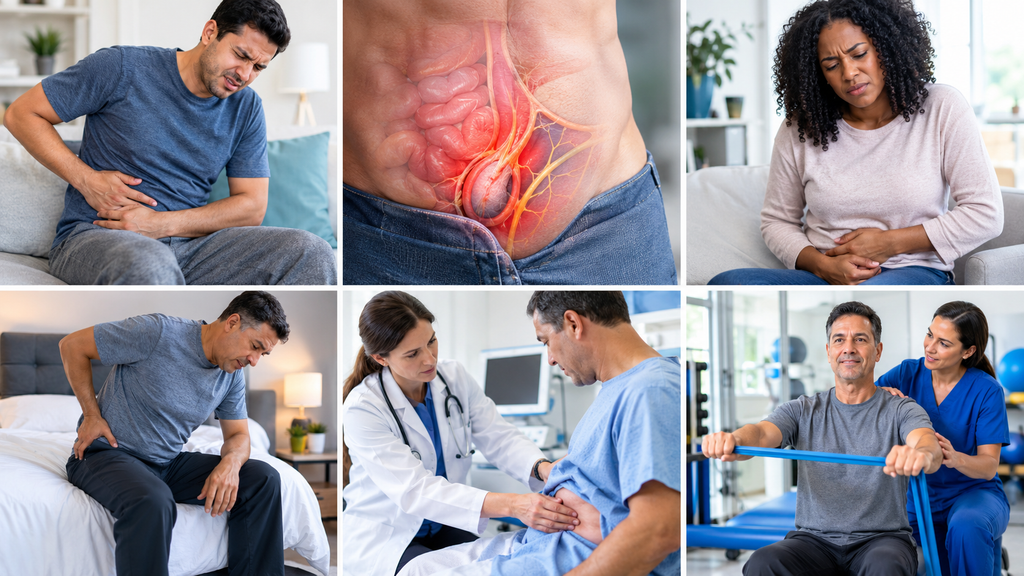
Is pain after surgery normal?
Yes. Some degree of pain, soreness, tenderness, or discomfort is expected after many surgical procedures.
The amount of pain you experience depends on several factors, including:
- The type of surgery
- The location and size of the incision
- Whether the procedure was open or minimally invasive
- How extensive the surgery was
- Your individual response to pain
- Existing medical conditions
- The tissues affected during surgery
- Your stage of recovery
MedlinePlus notes that different operations and surgical incisions can produce different levels and types of postoperative pain, and that individuals can experience and respond to pain differently. (MedlinePlus)
Pain by itself does not necessarily mean something has gone wrong.
The more important question is how the pain behaves over time.
Pain that gradually becomes easier to manage can be part of normal healing. Pain that suddenly becomes much worse, changes significantly, or occurs together with other concerning symptoms deserves medical attention.
How long does pain last after surgery?
There is no single recovery timeline that applies to every operation.
Some people experience substantial discomfort during the first few days, followed by gradual improvement. Others may have soreness, tightness, sensitivity, or intermittent discomfort for several weeks or longer.
The expected timeline depends heavily on the procedure.
For example:
| Type of recovery | Possible pattern |
|---|---|
| Minor procedures | Discomfort may improve relatively quickly |
| Abdominal surgery | Pain and movement-related discomfort may persist for weeks |
| Orthopedic surgery | Pain may fluctuate during rehabilitation |
| Joint replacement | Pain can continue while strength and mobility improve |
| Spinal surgery | Nerve and musculoskeletal symptoms may take longer to settle |
| Major surgery | Recovery can extend over weeks or months |
These are general patterns, not personal predictions. Your surgeon’s postoperative instructions should take priority.
MedlinePlus emphasizes that your surgical team should explain what symptoms and limitations you can expect during the first days, weeks, and months after an operation. (MedlinePlus)
A useful way to think about postoperative pain
Instead of asking only:
“How many days should my pain last?”
consider:
“Is my pain improving, staying stable, or getting worse?”
A gradual improvement is generally more reassuring than pain that progressively intensifies.
What does normal pain after surgery feel like?
Normal postoperative discomfort can take different forms.
You may experience:
- Aching
- Tenderness around the incision
- Soreness when moving
- Tightness or pulling
- Mild burning or sensitivity around the wound
- Temporary swelling
- Discomfort when coughing, standing, walking, or changing position
- Muscle soreness from being less active
- Bruising around the surgical area
The exact symptoms depend on the operation.
Some procedures can also produce discomfort away from the incision. For example, certain minimally invasive abdominal procedures can cause temporary gas-related or shoulder discomfort.
Your surgical team should explain what is expected for your particular procedure.
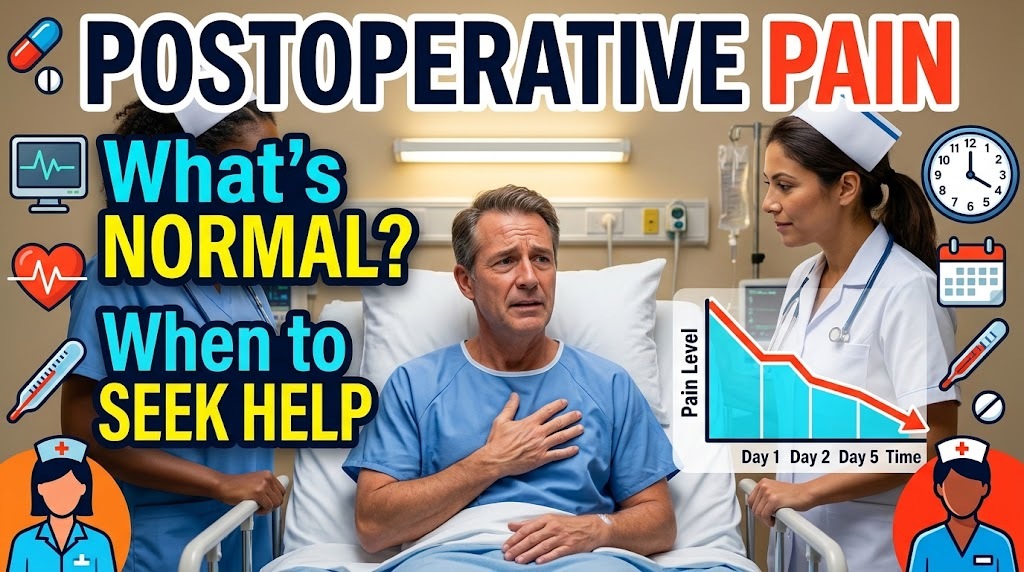
When should postoperative pain start getting better?
There is considerable variation, but pain should generally become more manageable as healing progresses.
The first several days can be particularly uncomfortable. After that, many patients gradually become more mobile and able to perform normal activities.
However, recovery is not always linear.
You may experience:
Improvement → temporary increase → improvement again
For example, discomfort may temporarily increase after:
- Physical therapy
- Increasing your activity
- Walking farther
- Returning to work
- Sleeping in a different position
- Performing rehabilitation exercises
That does not automatically indicate a complication.
However, new or rapidly worsening pain should not simply be assumed to be normal.
What helps relieve pain after surgery?
Postoperative pain management usually works best when it combines several appropriate strategies rather than relying on one approach.
Your healthcare team may recommend a combination of:
- Prescribed pain medication
- Non-opioid pain medicines when appropriate
- Local or regional pain-control techniques
- Appropriate movement
- Physical therapy or rehabilitation
- Rest and sleep
- Positioning
- Wound care
- Other procedure-specific measures
Modern postoperative pain management commonly uses a multimodal approach, meaning different methods may be combined to improve pain control while reducing reliance on opioids when appropriate. NICE describes multimodal analgesia as an approach intended to improve pain relief and reduce opioid-related complications. (Nice)
How to relieve pain after surgery naturally
If you’re searching for how to relieve pain after surgery naturally, it is important to distinguish between supportive recovery measures and treatments that actually replace medical pain management.
Natural or non-drug approaches may help with comfort, mobility, and recovery, but they should not be used to ignore severe or worsening postoperative pain.
1. Follow your activity instructions
Appropriate movement can be an important part of recovery.
After surgery, your healthcare team may encourage you to get up and move around when it is safe to do so.
The NHS recommends following medical advice about activity and gradually becoming more active as appropriate. Early movement is also part of enhanced recovery approaches used after many operations. (nhs.uk)
Do not, however, assume that more activity is always better.
Avoid lifting, stretching, exercising, or other activities that your surgeon has restricted.
2. Use comfortable positioning
Changing position may reduce pressure on the surgical area.
Depending on your procedure, you may find that:
- Supporting the operated area helps
- Keeping the affected limb elevated is recommended
- Sleeping in a particular position is more comfortable
- A pillow can provide additional support
The correct position depends on the operation, so follow your postoperative instructions.
3. Prioritize sleep and rest
Recovery places physical demands on the body.
Fatigue can make discomfort feel harder to manage, while poor sleep can make recovery more difficult.
Try to create a comfortable recovery environment and maintain a regular sleep schedule when possible.
If pain repeatedly prevents you from sleeping, tell your healthcare provider rather than simply tolerating it.
4. Eat and drink according to your postoperative instructions
Adequate nutrition and hydration are important parts of recovery.
Depending on the procedure, you may temporarily have dietary restrictions.
Follow the instructions provided by your surgical team rather than adopting a restrictive diet or fasting in an attempt to reduce inflammation.
5. Use relaxation techniques
Relaxation techniques may help you cope with discomfort.
Examples include:
- Slow breathing
- Meditation
- Progressive muscle relaxation
- Guided relaxation
- Quiet music
- Reducing unnecessary stimulation
These approaches should be considered complementary, not substitutes for appropriate medical treatment.
Should you avoid pain medicine after surgery?
Not necessarily.
There is a common misconception that taking pain medicine means you are slowing your recovery or that you should tolerate severe pain whenever possible.
Effective pain control can actually support recovery by helping patients move and participate in normal postoperative activities.
MedlinePlus explains that the goal of postoperative pain treatment is not necessarily to eliminate pain completely, but to reduce it enough to allow appropriate activity and recovery. (MedlinePlus)
Your healthcare team can determine which medications are appropriate based on:
- Your operation
- Other medicines you take
- Allergies
- Kidney and liver function
- Medical conditions
- Bleeding risk
- Previous reactions to medicines
- Risk of medication interactions
What pain medicines are used after surgery?
Depending on the operation and the individual patient, postoperative pain management may involve different types of medicines.
These can include:
Acetaminophen
Acetaminophen is commonly used for pain relief and may be appropriate for some patients.
However, the correct dose depends on the individual and other medicines they may be taking.
NSAIDs
Nonsteroidal anti-inflammatory drugs such as ibuprofen may be appropriate for some patients but are not suitable for everyone.
Factors such as kidney disease, gastrointestinal problems, bleeding risk, cardiovascular conditions, pregnancy, and other medications may affect whether an NSAID is appropriate.
Do not assume an over-the-counter medicine is automatically safe simply because it does not require a prescription.
Opioids
Opioid medicines may sometimes be prescribed for moderate-to-severe acute postoperative pain.
They can cause adverse effects and carry risks including dependence and misuse, which is why clinicians generally aim to use appropriate pain-control strategies while limiting unnecessary opioid exposure.
MedlinePlus notes that postoperative pain plans can include different medicines or combinations depending on the surgery and patient’s circumstances. (MedlinePlus)
Never increase, combine, stop, or substitute prescription pain medicines without appropriate medical guidance.
Why does pain sometimes feel worse at night after surgery?
Some people notice postoperative pain more strongly at night.
Several factors may contribute, including:
- Fewer distractions
- Sleeping in a position that puts pressure on the surgical area
- Reduced movement
- Muscle stiffness
- Medication timing
- Anxiety about symptoms
- Difficulty getting comfortable
Nighttime pain can therefore occur during otherwise normal recovery.
However, if pain that was previously improving suddenly becomes severe at night—or is accompanied by other symptoms—you should contact your healthcare provider.
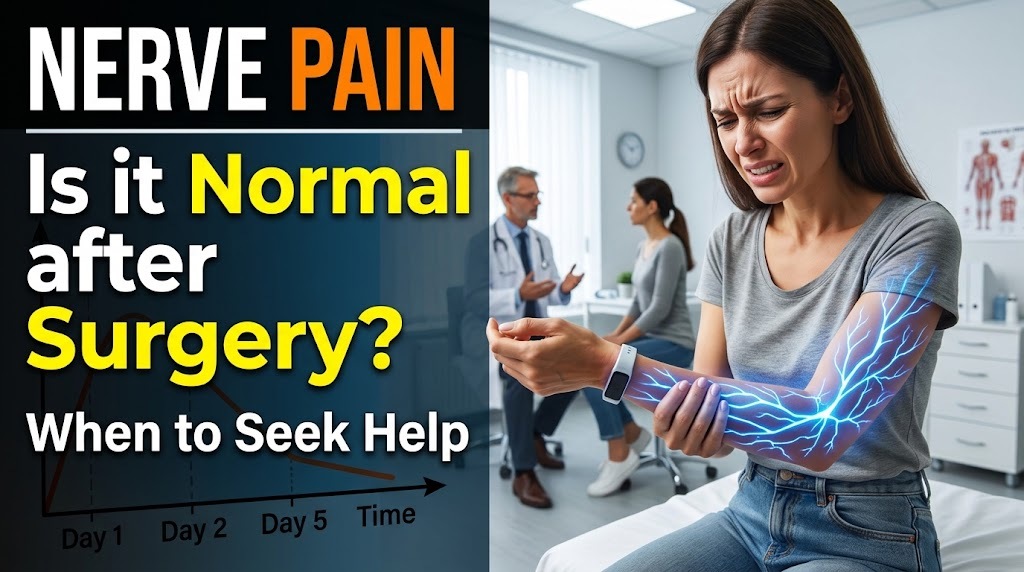
What causes nerve pain after surgery?
Nerve-related pain can feel different from ordinary surgical soreness.
People may describe it as:
- Burning
- Tingling
- Pins and needles
- Electric-shock sensations
- Shooting pain
- Numbness
- Hypersensitivity
Nerves can be irritated or affected during surgery, and some operations involve areas where nerves are particularly important.
Nerve symptoms can sometimes improve gradually as healing progresses, but persistent or worsening neurological symptoms should be evaluated by a healthcare professional.
Seek prompt medical advice if you develop new weakness, significant loss of sensation, difficulty walking, or other neurological changes.
Can surgery cause pain months later?
Yes, some people can experience pain or altered sensation beyond the early recovery period.
Persistent postoperative pain can have different causes, including:
- Nerve-related pain
- Scar tissue
- Ongoing inflammation
- Musculoskeletal problems
- Recurrence of the original condition
- Complications
- Changes in how the body moves during recovery
The explanation depends on the type of surgery.
Pain that persists for months should not automatically be dismissed as “normal.”
If pain continues beyond the recovery period your surgeon described—or interferes with sleep, work, movement, or daily activities—arrange a medical review.
Pain after laparoscopic surgery
Laparoscopic or other minimally invasive procedures use small incisions, but they can still cause postoperative discomfort.
Patients may experience:
- Incision pain
- Abdominal soreness
- Bloating
- Shoulder discomfort after certain abdominal procedures
- Muscle soreness
- Temporary digestive discomfort
The recovery experience depends on the procedure performed.
Minimally invasive surgery does not mean that postoperative pain should be ignored.
Follow the specific instructions provided by your surgical team.
What symptoms after surgery are not normal?
The presence of pain alone does not tell you whether a complication is occurring.
More concerning patterns include:
Pain that suddenly becomes severe
A significant and unexpected increase in pain deserves medical assessment.
Pain that keeps getting worse
Pain that is progressively worsening rather than becoming more manageable should be discussed with your healthcare provider.
Increasing redness or swelling
Changes around the incision can sometimes indicate a problem, particularly when accompanied by other symptoms.
Fever or feeling significantly unwell
Fever, chills, worsening pain, or other systemic symptoms can occur with infection or other complications.
Drainage from the wound
Unexpected pus-like drainage, significant bleeding, or other concerning wound changes should be assessed.
New leg swelling or pain
After surgery, pain or swelling in a leg can be a sign of deep vein thrombosis and requires prompt medical attention. The NHS specifically advises seeking medical help immediately for symptoms such as leg pain or swelling with warmth or discoloration after surgery. (nhs.uk)
Breathing difficulties or chest symptoms
New difficulty breathing, chest pain, coughing up blood, or severe unexplained symptoms can represent a medical emergency.
If you develop severe breathing difficulty, chest pain, collapse, or another potentially life-threatening symptom, seek emergency medical care immediately.
When should you call your surgeon about pain?
Contact your surgical team if:
- Your pain is not controlled by the prescribed plan
- Pain is becoming progressively worse
- You develop new or unusual pain
- You have increasing swelling
- Your wound changes significantly
- You develop fever or chills
- You have unexpected drainage or bleeding
- You develop new numbness or weakness
- Pain prevents you from sleeping or moving as instructed
- You are unsure whether your symptoms are expected
You do not need to wait until pain becomes unbearable before asking for help.
The NHS specifically advises patients to report postoperative pain to their healthcare team so appropriate pain relief can be provided. (nhs.uk)
How can you tell whether pain is improving?
A simple way to monitor recovery is to look for trends rather than focusing on one individual moment.
Ask yourself:
Is the pain becoming easier to manage?
Am I gradually able to do more?
Is the surgical area healing as expected?
Are new symptoms appearing?
Does activity cause a temporary increase that settles with rest, or is the pain continuously worsening?
Keeping a brief record of pain severity, activity, medication timing, and other symptoms can also help your healthcare provider understand your recovery.
What should you do if pain medicine isn’t working?
Do not simply take more medicine than prescribed.
Instead:
- Follow the medication instructions you were given.
- Record when you take each medication.
- Note how well it controls your pain.
- Tell your healthcare provider if the pain remains poorly controlled.
- Ask whether your pain-management plan needs adjustment.
MedlinePlus specifically advises patients to tell their healthcare providers when pain is not adequately controlled. (MedlinePlus)
Your clinician may determine that a different medication, combination, route of administration, or non-drug approach is appropriate.
Does moving around make postoperative pain worse?
Sometimes.
Movement can temporarily increase discomfort, particularly early in recovery.
That does not necessarily mean movement is harmful.
Appropriate mobility is often an important part of postoperative recovery, and the NHS advises patients to begin moving around as soon as medically appropriate while following their clinician’s instructions. (nhs.uk)
The key is appropriate movement rather than pushing through severe pain.
If a particular movement causes sharp, severe, or unexpected pain, stop and follow your surgical team’s advice.
Pain after surgery: normal vs concerning
| More consistent with expected recovery | More concerning |
|---|---|
| Gradually improving discomfort | Rapidly worsening pain |
| Mild-to-moderate soreness | Severe or uncontrolled pain |
| Tenderness around the incision | Increasing redness or swelling |
| Temporary discomfort after activity | Persistent worsening after activity |
| Bruising that gradually improves | Significant or unexpected bleeding |
| Mild swelling that improves | Rapidly increasing swelling |
| Temporary sensitivity | New weakness or major loss of sensation |
| Pain that responds to the prescribed plan | Pain not controlled despite following the plan |
This table is a general guide—not a diagnostic tool.
The expected symptoms vary substantially according to the operation.
How to support a healthy recovery after surgery
Pain management is only one part of postoperative recovery.
Depending on your operation, recovery may also involve:
Follow wound-care instructions
Keep the surgical area clean and cared for according to your discharge instructions.
Attend follow-up appointments
Follow-up allows your healthcare team to assess healing and address problems.
Gradually increase activity
Follow your surgeon’s restrictions and rehabilitation plan.
Take medications as prescribed
Do not change prescription medicines without medical advice.
Maintain appropriate nutrition and hydration
Follow any procedure-specific dietary instructions.
Ask questions
If you are unsure whether a symptom is normal, ask your healthcare provider.
MedlinePlus and NHS guidance both emphasize following the instructions provided by the surgical team during recovery. (MedlinePlus)
Frequently Asked Questions Pain After Surgery
How long does pain last after surgery?
The duration varies according to the operation, incision, individual health, and recovery process. Some postoperative pain is expected during early healing, but the severity should generally become more manageable over time. Your surgeon can provide the most accurate recovery expectations for your specific procedure.
How can I relieve pain after surgery naturally?
Supportive measures such as appropriate movement, comfortable positioning, adequate rest, relaxation techniques, and following wound-care instructions may improve comfort. However, natural approaches should complement—not replace—appropriate medical pain management or evaluation of severe or worsening symptoms.
What is normal pain after surgery?
Normal postoperative pain may include soreness, tenderness, aching, tightness, or discomfort around the surgical area. The expected pattern depends on the operation. Pain that progressively worsens, becomes severe, or occurs with other concerning symptoms should be assessed by a healthcare professional.
Why does my surgery site still hurt?
Healing tissues can remain tender after surgery, and some procedures have longer recovery periods. Persistent pain can also have other causes, including nerve-related symptoms, scar tissue, complications, or recurrence of an underlying condition. Persistent or worsening pain should be discussed with your healthcare provider.
Why is my pain worse at night after surgery?
Pain may feel more noticeable at night because there are fewer distractions, your position may place pressure on the surgical area, and stiffness can develop after remaining still. Medication timing can also influence symptoms. Sudden or severe nighttime pain should be medically assessed.
Can nerve pain happen after surgery?
Yes. Some people experience burning, tingling, shooting sensations, numbness, or hypersensitivity after surgery. Nerve-related symptoms may improve during recovery, but new weakness, significant numbness, difficulty walking, or worsening neurological symptoms require medical evaluation.
Should I take pain medicine even if I can tolerate the pain?
Your medication plan should be based on the instructions provided by your healthcare team. Do not change prescribed medicines simply to avoid taking them, and do not exceed recommended amounts. If you have concerns about your medication, ask your surgeon or pharmacist.
When should I worry about pain after surgery?
Seek medical advice if pain is severe, suddenly worsens, is not controlled by the prescribed treatment, or occurs with symptoms such as fever, significant wound changes, unexpected bleeding, new leg swelling, breathing difficulty, chest pain, weakness, or major neurological changes.
The Bottom Line
Pain after surgery is common, but the expected amount and duration depend on the operation and the individual.
The most useful indicator is often the overall recovery trend. Pain that gradually becomes easier to manage is generally different from pain that becomes increasingly severe or is accompanied by new symptoms.
Appropriate movement, rest, wound care, prescribed medications, and other clinician-recommended strategies can all contribute to recovery. Evidence-based postoperative care commonly uses several pain-management approaches together rather than relying on one method. (MedlinePlus)
If you are experiencing severe, rapidly worsening, or unusual pain, do not rely on an online article to determine the cause. Contact your surgical team or seek urgent medical care when appropriate.
Recommended authoritative references
- MedlinePlus — After Surgery (MedlinePlus)
- MedlinePlus — Postsurgical Pain Treatment in Adults (MedlinePlus)
- NHS — After Surgery (nhs.uk)
- NHS — Getting Back to Normal After Surgery (nhs.uk)
- NICE — Perioperative Care / Postoperative Pain Management (Nice)
Internal links
- Pain After Hernia Surgery
- Pain After Rotator Cuff Surgery
- Pain After Hip Replacement
- Nerve Pain After Surgery
- Pain After Ankle Surgery
- Pain After Cataract Surgery
- Pain After Spinal Fusion
- Pain After Knee Surgery
- Pain After Colostomy Surgery
Medical disclaimer: This article provides general educational information and is not a substitute for advice from your surgeon, physician, pharmacist, or other qualified healthcare professional. If you have recently undergone surgery and are concerned about your pain, follow your discharge instructions and contact your healthcare team.