Pain After Hernia Surgery: How Long It Lasts, Relief & When to Worry
Quick answer: Is pain normal after hernia surgery?
Yes. Some pain, tenderness, bruising, swelling or numbness can be normal after hernia surgery, particularly during the first several days and weeks of recovery. The amount and duration of discomfort depend on the type of repair, surgical approach and individual recovery.
For example, the NHS says that pain around the wound for several days, bruising or swelling for a couple of weeks, and some numbness below the wound can occur after inguinal hernia repair. Recovery commonly takes around 4–6 weeks, although it can take longer.
Pain that is severe, worsening rather than improving, associated with fever or wound changes, or accompanied by breathing difficulty or chest pain should be medically assessed.
Table of Contents
What does pain after hernia surgery feel like?
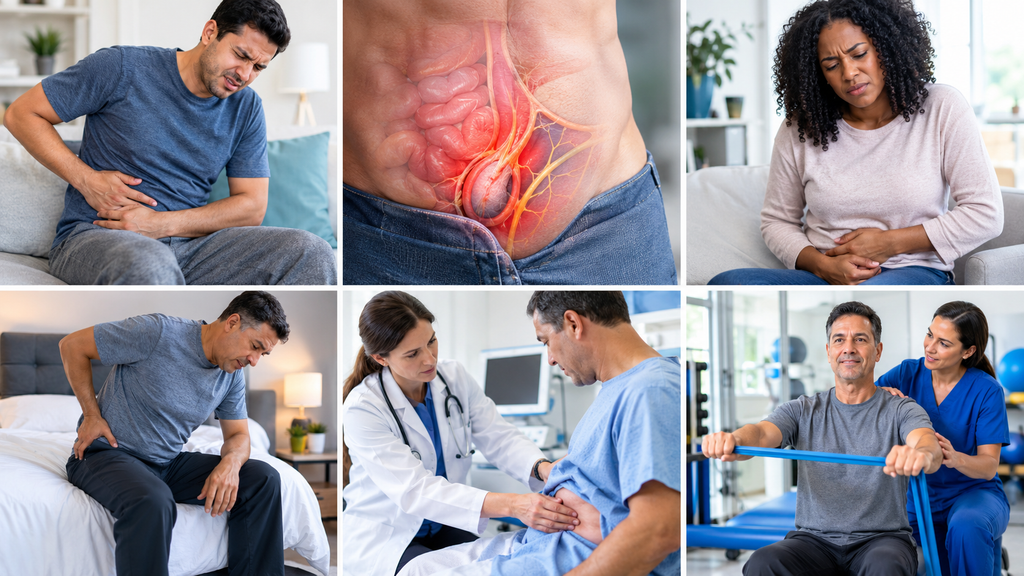
Postoperative discomfort can take several forms. You may experience:
- Soreness around the incision
- Tenderness when touching the surgical area
- A pulling or tight sensation
- Discomfort when standing, walking, coughing or sneezing
- Bruising or swelling
- Temporary numbness around or below the incision
- Abdominal or groin discomfort
- Aching after physical activity
The precise symptoms depend on the operation.
An inguinal hernia repair, for example, involves surgery around the groin, while other hernia repairs may involve the abdominal wall. Different operations therefore produce different patterns of postoperative pain.
MedlinePlus notes that the amount of postoperative pain depends partly on the type of surgery, the surgical incision and how invasive the procedure was. Individual responses to pain also vary.
Does pain mean something went wrong?
Not necessarily.
Pain by itself does not automatically indicate a complication. What matters is the severity, pattern and direction of the symptoms.
Pain that gradually becomes easier to manage as healing progresses is generally different from pain that suddenly becomes severe or progressively worse.
If you’re concerned about your recovery, your surgical team is the appropriate source for individualized advice.
How long does pain last after hernia surgery?
There is no single number of days that applies to everyone.
After an uncomplicated inguinal hernia repair, the NHS states that wound pain is commonly present for several days, while bruising or swelling may persist for a couple of weeks. Overall recovery usually takes around 4 to 6 weeks, although some people take longer.
A general recovery pattern may look like this:
The first few days
Pain and tenderness around the surgical site are common.
Movement, coughing, sneezing or getting up from a chair may temporarily increase discomfort.
Your healthcare team may recommend prescribed or over-the-counter pain medicines depending on your individual circumstances.
The first few weeks
Pain should generally become easier to manage as healing progresses, although soreness, swelling, bruising or pulling sensations can remain.
You may still notice discomfort when increasing your activity.
Around four to six weeks
Many people are considerably further through recovery by this stage, but the exact timeline varies.
Your surgeon may provide specific instructions about returning to work, exercise, lifting and other activities.
Beyond six weeks
Persistent symptoms do not automatically mean something is seriously wrong, but continuing pain should be discussed with your healthcare professional, particularly if it is interfering with normal activities or is not gradually improving.
Is it normal to have pain months after hernia surgery?
Some people can experience groin pain or numbness for longer than the initial recovery period.
The NHS specifically notes that pain or numbness in the groin can sometimes last longer than three months following inguinal hernia repair.
However, persistent pain deserves attention rather than being automatically dismissed as part of recovery.
Several factors can contribute to longer-lasting postoperative discomfort, including:
- Nerve irritation
- Scar-related changes
- Ongoing inflammation
- The underlying condition
- The type of hernia repair
- Recurrence of the hernia
- Other postoperative complications
These possibilities cannot be distinguished reliably from symptoms alone.
If pain continues for months, becomes increasingly bothersome, or affects walking, sleep, work or everyday activities, arrange an assessment with your surgeon or another qualified healthcare professional.
What causes pain after hernia surgery?
Pain after surgery occurs partly because surgical treatment involves cutting or manipulating tissue.
During recovery, the body repairs those tissues and produces an inflammatory response. This can result in soreness, tenderness and sensitivity.
The location and character of pain can also vary according to the procedure.
Potential contributors include:
Surgical incision
The incision itself can remain tender while the skin and deeper tissues heal.
Tissue healing
Muscles and other tissues manipulated during surgery can remain sore during recovery.
Swelling and bruising
Fluid accumulation and bruising around the surgical area can create pressure or tenderness.
Nerve irritation
Nerves near the surgical area can sometimes become irritated, producing sensations such as burning, tingling, numbness or shooting pain.
Physical activity
Doing more than your recovery plan allows can temporarily increase discomfort.
Your surgeon’s instructions should take priority over generalized online recovery timelines.
What can help relieve pain after hernia surgery?
Pain management should be individualized according to the operation, your health and the medications you can safely take.
Your surgical team may recommend one or more approaches.
Take pain medicine exactly as directed
Depending on your circumstances, your clinician may recommend prescription or non-prescription pain relief.
Do not assume that a medication is appropriate simply because it is available without a prescription.
For example, some medicines can be unsuitable for people with certain medical conditions or for people taking particular medications.
NICE recommends tailoring postoperative pain management to the individual and the type of surgery.
Keep moving when your surgeon says it is safe
Gentle movement is often part of postoperative recovery.
The NHS recommends keeping mobile and gradually increasing activity after inguinal hernia repair, while avoiding heavy lifting and strenuous activity during the recommended recovery period.
Do not use general online advice to override your surgeon’s specific restrictions.
Support the wound when coughing
Some people find that gently supporting the surgical area when coughing or sneezing reduces discomfort.
The NHS specifically includes supporting the wound with your hand when coughing or sneezing among its recovery advice following inguinal hernia repair.
Follow your activity restrictions
Trying to return to strenuous exercise or heavy lifting too quickly can interfere with recovery.
Your surgeon should tell you when it is appropriate to resume specific activities.
Follow wound-care instructions
Keeping the surgical wound clean and following your healthcare team’s instructions can help reduce the risk of complications.
Can you have gas pain after hernia surgery?
Gas-related discomfort can occur after some laparoscopic procedures.
During laparoscopic surgery, the abdomen is inflated with gas to create working space for the surgeon. The NHS notes that people can experience bloating or shoulder pain for a couple of days following keyhole inguinal hernia surgery because of the gas used during the procedure.
This type of discomfort is different from persistent or progressively worsening abdominal pain.
If abdominal pain is getting worse rather than better, particularly if it occurs with vomiting, fever or significant swelling, contact your healthcare team.
Why does my groin still hurt after hernia surgery?
There are several possible explanations.
Some patients experience longer-lasting groin discomfort or numbness following hernia repair. The NHS recognizes that groin pain or numbness can occasionally persist beyond three months.
Possible contributors can include postoperative nerve irritation, scar-related changes, persistent inflammation or recurrence.
However, symptoms cannot determine the cause with certainty.
A healthcare professional may need to examine the surgical area and consider your surgical history, symptoms and recovery pattern.
When should you worry about pain after hernia surgery?
Contact your healthcare team if pain is:
- Becoming significantly worse
- Not improving as expected
- Not adequately controlled by the treatment provided
- Associated with increasing abdominal or groin swelling
- Accompanied by persistent nausea or vomiting
- Associated with increasing redness, warmth or drainage around the wound
- Associated with fever or chills
- Accompanied by difficulty urinating
- Associated with significant bleeding
The NHS specifically advises seeking medical help for increasing abdominal pain or swelling, pain not relieved by painkillers, wound redness or other signs of infection, persistent vomiting and other concerning symptoms after hernia repair.
When is pain after hernia surgery an emergency?
Some symptoms require urgent medical attention.
Seek emergency help if you develop symptoms such as:
- Severe difficulty breathing
- Significant chest pain
- Severe or rapidly worsening symptoms
- Coughing up more than a small amount of blood
- Symptoms suggesting a serious blood clot or other acute complication
For example, the NHS advises emergency assessment for severe breathing difficulty or chest pain after inguinal hernia repair because these can indicate serious complications such as pulmonary embolism.
If you believe you are experiencing a medical emergency, use your local emergency medical service rather than relying on an online article.
Pain after open vs. laparoscopic hernia surgery
The recovery experience can differ depending on the surgical technique.
Open hernia repair
Open surgery uses an incision to access and repair the hernia.
The incision and surrounding tissues can remain sore during the early recovery period.
Laparoscopic or keyhole repair
Laparoscopic surgery uses several smaller incisions and instruments inserted through the abdominal wall.
Because the abdomen is inflated during the procedure, temporary bloating or shoulder discomfort can occur afterward.
Neither technique means that every patient will experience the same amount or duration of pain.
The type and location of the hernia, surgical complexity, individual health and postoperative recovery all matter.
How can you tell if hernia surgery pain is getting better?
Instead of focusing only on whether you still have pain, consider the overall trend.
Signs that recovery may be progressing include:
- Pain becoming easier to manage
- Gradually increasing mobility
- Reduced swelling or bruising
- Less tenderness around the incision
- Increasing ability to perform normal daily activities
- Gradual reduction in the need for pain relief, when appropriate
Conversely, contact your healthcare professional if symptoms are moving in the opposite direction.
A sudden deterioration after a period of improvement is particularly important to report.
Frequently Asked Questions Pain After Hernia Surgery
How long does pain last after hernia surgery?
Pain commonly occurs during the first several days after hernia repair. Bruising or swelling can last longer, and overall recovery may take around 4–6 weeks for an uncomplicated inguinal repair. Some people experience discomfort for longer, so persistent symptoms should be discussed with a healthcare professional.
How long are you in pain after hernia surgery?
There is no universal duration. Many people experience the greatest discomfort during the early postoperative period, followed by gradual improvement. The type of repair and individual recovery affect how long symptoms remain.
Is it normal to have pain months after hernia surgery?
Some people can experience groin pain or numbness for more than three months after inguinal hernia repair. Persistent pain should nevertheless be discussed with your surgeon or healthcare professional, particularly when it is worsening or affecting daily life.
Why does my groin still hurt after hernia surgery?
Possible causes include normal tissue healing, nerve irritation, scar-related changes, persistent inflammation or recurrence. An examination may be necessary to determine the cause.
How can I relieve pain after hernia surgery?
Follow your surgeon’s pain-management instructions, use medicines only as directed, keep gently mobile when permitted, follow lifting restrictions and care for the wound according to your postoperative instructions.
Can I exercise after hernia surgery?
Your return to exercise should follow your surgeon’s instructions. Gentle activity such as walking may be encouraged during recovery, while strenuous exercise and heavy lifting may need to be restricted for several weeks.
Why does my shoulder hurt after laparoscopic hernia surgery?
Temporary shoulder discomfort can occur after laparoscopic surgery because gas is used to inflate the abdomen during the procedure. The NHS notes that this type of discomfort can occur for a couple of days after keyhole inguinal hernia repair.
When should I call my doctor about pain after hernia surgery?
Contact your healthcare team if pain is getting worse, is not adequately controlled, or occurs with symptoms such as fever, wound redness or drainage, increasing swelling, persistent vomiting, difficulty urinating or significant bleeding.
Key Takeaway
Pain after hernia surgery is common, especially during the early stages of recovery, but it should generally become easier to manage as healing progresses. Recovery can take several weeks, and some people experience longer-lasting pain or numbness.
Persistent, severe or worsening pain should not simply be ignored. Contact your surgeon or healthcare professional for an assessment, and seek emergency care for serious symptoms such as severe breathing difficulty or chest pain.
Medical Review & Editorial Note
This article should be medically reviewed by a qualified general surgeon, colorectal surgeon or appropriately credentialed healthcare professional before publication.
The reviewer should verify:
- Recovery timelines
- Procedure-specific advice
- Medication information
- Red-flag symptoms
- Emergency-care recommendations
- Statements concerning chronic postoperative pain
- Differences between open and laparoscopic/robotic procedures
Last reviewed: September 2026
Medical disclaimer: This article provides general educational information and does not replace advice from your surgeon, doctor, pharmacist, or other qualified healthcare professional. Recovery varies depending on the type of hernia, surgical technique, overall health and individual circumstances.
Recommended internal links:
- Pain After Surgery
/pain-after-surgery/nerve-pain-after-surgery//pain-after-surgery/pain-medication-after-surgery//pain-after-surgery/gas-pain-after-surgery//pain-after-surgery/abdominal-surgery-pain/